10 Best Low Cost Organization Methods That Work
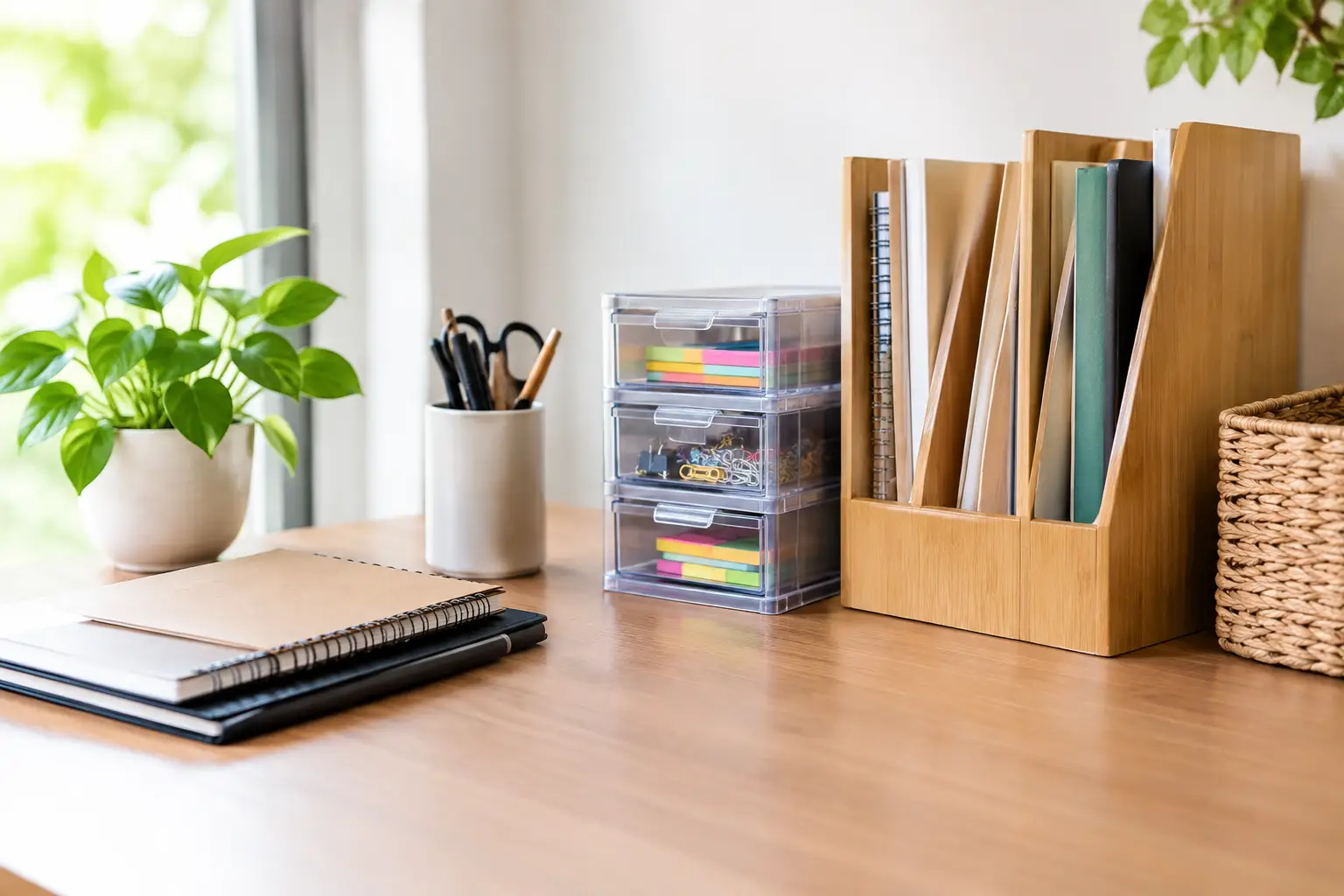
A drawer stuffed with cables, a counter buried under mail, and a calendar full of loose reminders create the same problem: your attention has no clear place to land. The best low cost organization methods do not begin with a shopping cart. They begin by giving what you already own a visible, repeatable home.
Organization is not a decorating project. It is a practical system for reducing daily friction. When the system is simple, you spend less time searching, deciding, and starting over. You reclaim your space and your focus without turning your home into a storage-product showroom.
What Makes a Low-Cost Method Work
A method is low cost when it requires little or no new equipment, but cost is not the only issue. It must also be easy to maintain when work gets busy, children need attention, energy is low, or your routine changes.
The strongest systems have three qualities. They use clear limits, keep needed items close to where you use them, and make the next action obvious. If a system needs labels on every object, ten categories, or a weekend of setup, it may look organized for a moment but will be hard to live with.
Start with one problem area. A single desk, kitchen counter, backpack, bathroom shelf, or phone screen is enough. Small wins create evidence that the system works.
1. Use the 1-Meter Reset
Choose one area about one meter wide: the section of counter where clutter collects, one shelf, one chair, or the floor beside your bed. Clear only that space. Then decide what belongs there based on its actual purpose, not on what happened to land there.
Keep only the items used in or near that zone. Move the rest to their real homes, place them in a decision box, or let them go. A 1-meter boundary prevents the familiar mistake of pulling out everything and creating a bigger mess than you started with.
This approach works because it reduces the emotional weight of organizing. You are not fixing your whole life. You are restoring one usable area. At HCT Books, this is the logic behind treating organization as a spatial operating system: define the space, assign the function, and repeat.
2. Create Homes Before Buying Containers
People often buy bins because they want an instant sense of control. Bins can help, but they cannot decide what should stay, what should leave, or where items are most useful. Buying storage before making those decisions often creates neatly contained clutter.
Use what you have first: a shoebox for charging cords, a mug for pens, an envelope for receipts, or a clean jar for small bathroom items. The container is secondary. The rule matters more: one category, one home.
If a category does not fit in its assigned space, you have useful information. You may own too much, need to split the category, or need a larger home. Do not automatically solve the problem by adding more storage.
3. Set a One-In, One-Out Limit
For categories that multiply quietly, use a simple replacement rule. When one item enters, one similar item leaves. This works well for shirts, water bottles, mugs, cosmetics, notebooks, toys, and kitchen tools.
The goal is not strict minimalism. The goal is capacity. Every shelf, drawer, and closet has a limit. When you ignore that limit, items become harder to see and harder to use.
Choose categories where excess creates daily frustration. If you have six useful coffee mugs and twenty that stay buried in a cabinet, the excess is not serving you. Keep enough for your real household needs, not for an imagined version of your life.
4. Build a Landing Zone for Incoming Clutter
Incoming items are a major source of disorder. Mail, school papers, packages, keys, bags, and receipts enter the home every day. Without a designated landing zone, they spread across tables, counters, and chairs.
Create one small intake point near the entrance or where you naturally set things down. A bowl can hold keys. A tray or folder can hold papers that need action. A bag or box can hold returns, donations, or items that must leave the house.
The key is to separate action papers from papers you are keeping. Most mail can be recycled immediately. The rest should move into one of three paths: act on it, file it, or discard it. Do not create a fourth path called “deal with it later.” That path becomes a pile.
5. Organize by Point of Use
An item should live as close as possible to where you use it. This is one of the best low cost organization methods because it removes unnecessary movement and makes cleanup almost automatic.
Keep cleaning cloths where you clean, charging cables where you charge, scissors near the place you open packages, and medications in a safe location that matches your routine. A pair of reading glasses belongs where you read, not in a random drawer because the drawer is empty.
There is a trade-off. Storing duplicates in multiple places can cost more and create waste. Use duplicates only for low-cost essentials that prevent repeated friction, such as a pen near the entryway and another at your desk. For everything else, give the item one reliable home.
6. Use Open, Visible Storage for Daily Items
Hidden storage looks clean, but it is not always practical. If you forget what is behind a cabinet door or at the bottom of a deep drawer, you will buy duplicates or leave things out where you can see them.
For items used daily, visibility often beats perfection. Use a simple basket, tray, hook, or open shelf. Keep the number of items low enough that the area still looks calm. A visible system should make the right action easier, not turn every surface into a display.
This is especially useful for families, students, and anyone managing a fast morning routine. Put the items needed for tomorrow in one visible place the night before. Fewer searches mean fewer rushed decisions.
7. Create a “Decide Later” Box With a Deadline
Some items are hard to decide about on the spot. They may have sentimental value, possible future use, or an unclear owner. Instead of letting them block progress, place them in one box marked with a date.
Give yourself 30 days. If you did not need, miss, or look for an item during that period, it is easier to donate, recycle, sell, or discard it. This method is not permission to postpone every decision. It is a controlled pause for the few decisions that genuinely need one.
Keep the box limited. If it becomes a permanent storage category, the system has failed. The deadline is what turns hesitation into a decision.
8. Run a 10-Minute Closing Shift
The most affordable organizing tool is a short daily reset. Set a timer for 10 minutes near the end of your day. Return items to their homes, clear the main surface, prepare what you need for tomorrow, and put obvious trash or recycling out.
Do not try to deep-clean. This is maintenance, not a major project. The purpose is to stop small disorder from becoming a weekend emergency.
If 10 minutes feels unrealistic, begin with five. Consistency matters more than duration. A small reset done most days protects your space better than a three-hour burst done once a month.
9. Use a Single Capture List for Loose Tasks
Physical clutter and mental clutter often feed each other. Notes on scraps of paper, reminders buried in messages, and unfinished ideas make it harder to focus. Use one notebook, one note on your phone, or one sheet of paper as your capture list.
Write down tasks as they appear. Then review the list at a set time each day. Decide whether to do the task, schedule it, delegate it, or remove it. The system does not need to be advanced. It needs to be trusted.
Avoid maintaining several competing lists. When you are unsure where a task belongs, you are more likely to keep it in your head. That is not organization. That is mental overload.
10. Maintain the System at the Source
When clutter returns, do not blame yourself first. Look for the point where the system breaks. Are shoes piling up because there is no place to sit while removing them? Are papers collecting because filing is too far away? Is laundry staying on the chair because the hamper is inconvenient?
Fix the source, not just the symptom. Move the hamper. Add a hook you already own. Put a recycling bag where mail gets opened. Reduce the number of steps between use and return.
Your system should fit your real behavior. The best method is not the one that looks most impressive online. It is the one you can repeat on an ordinary Tuesday when you are tired, busy, and short on patience.
Choose one meter of space today. Clear it, give it a purpose, and protect it with a simple reset. Control grows from small areas you can maintain.