Household Organization That Works on Busy Weeks
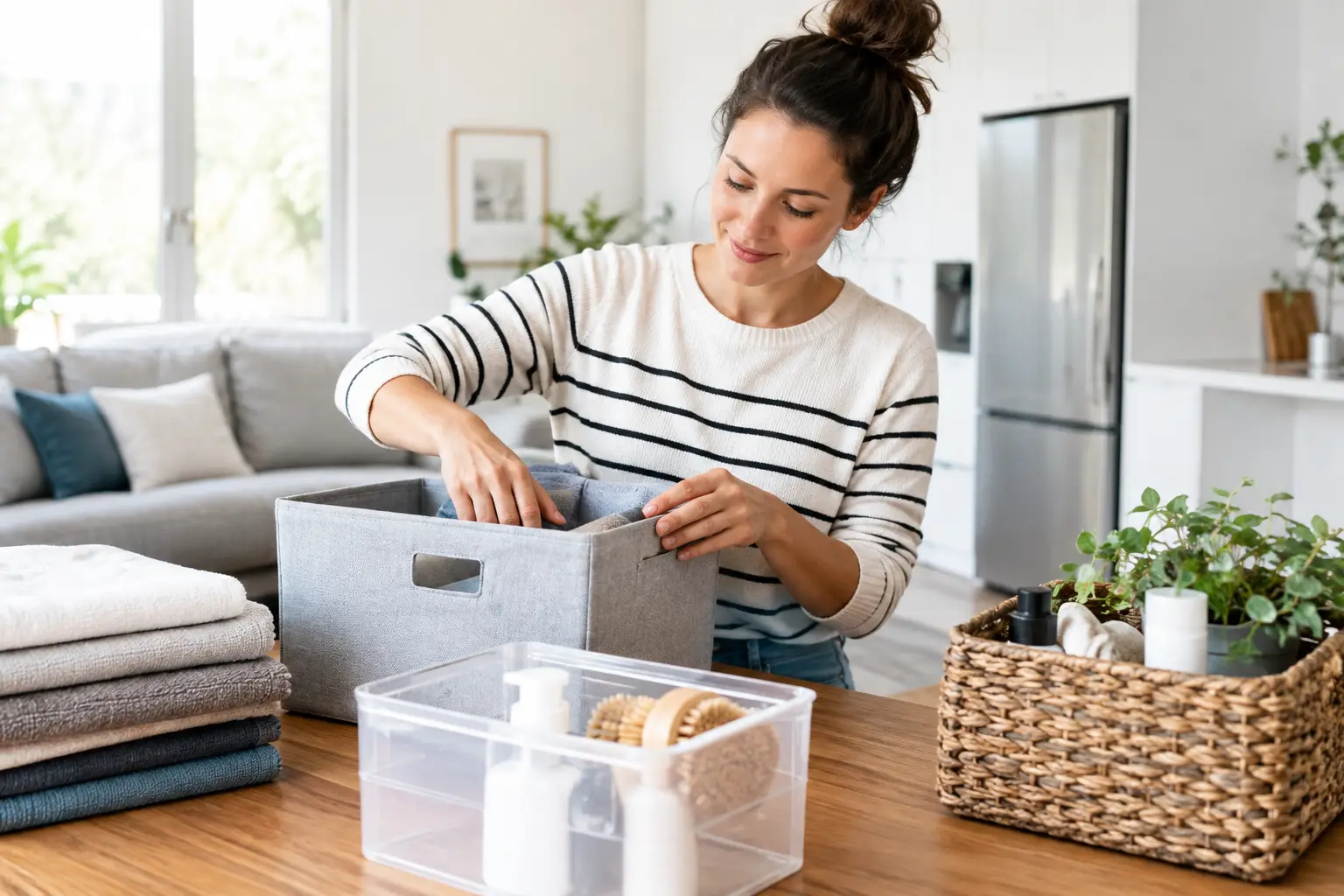
A home does not become difficult because you own too much stuff. It becomes difficult when everyday items have no clear place, no clear limit, and no routine for returning them. Effective household organization fixes that problem without requiring a shopping trip, a color-coded lifestyle, or an entire free weekend.
The goal is not a perfect home. The goal is a home that can recover after a busy morning, a work deadline, a school night, or a low-energy day. When your space recovers quickly, it stops demanding so much of your attention.
Start With the Space That Creates the Most Friction
Do not organize the whole house at once. That approach feels productive for an hour, then becomes another unfinished project. Start with the one small area that creates repeated stress: the kitchen counter, entryway, bathroom sink, dining table, laundry chair, or desk.
Choose an area no larger than one meter wide. This creates a useful boundary. You can see the entire problem, make decisions faster, and finish the job before motivation disappears. A one-meter area is small enough to manage and large enough to create a noticeable result.
Remove everything from that space. Then separate what you find into three simple groups: items that belong there, items that belong somewhere else, and items you no longer need. Do not begin by buying containers. First decide what deserves to stay.
This step matters because storage can hide a decision you have not made. A basket full of random objects is still random objects. Household organization begins with clarity, not products.
Give Every Frequent Item a Home
A "home" is not simply a drawer, shelf, or bin. It is the specific place where an item can be returned without thought. Keys might live in one bowl near the door. Mail might go into one tray. Chargers might stay in one drawer. School papers might have one temporary landing spot before they are reviewed.
The best home is usually close to where the item is used. Keep coffee supplies near the coffee maker. Put cleaning wipes where you actually clean. Store shoes near the exit, not across the house in a closet that no one uses before leaving.
This is where many organizing systems fail. They are designed for how a home looks, not for how people move through it. A beautiful storage solution that adds five extra steps will not survive a busy week.
Ask one question for each frequently used item: Where would I naturally look for this first? That answer is often the right location.
Use the Point-of-Use Rule
The point-of-use rule is simple: store an item as close as practical to where it is used. It reduces search time, clutter migration, and the mental effort of putting things away.
There are exceptions. Dangerous items should be secured, important documents need protection, and limited storage may require compromises. But for daily items, convenience beats perfection. If a system works for the people in the home, it is a good system.
Set Limits Before Clutter Sets Them for You
Every category needs a physical limit. A drawer, shelf, hook, or container can act as a boundary. When the space is full, the answer is not automatically a larger container. The answer may be fewer items.
This is especially useful for categories that multiply quietly: reusable bags, food containers, mugs, toiletries, cleaning supplies, cables, kids' artwork, and paper. Without a limit, these items spread into nearby areas and turn useful surfaces into storage.
Use the container as the rule. If one shelf is for towels, keep the number of towels that fits comfortably on that shelf. If one drawer is for batteries and chargers, do not expand into three drawers just because more cables exist.
Limits are not punishment. They protect your time. They also make maintenance easier because you can see when a category needs attention.
Build a Reset, Not a Cleaning Marathon
Household organization is maintained through short resets. A reset is not deep cleaning. It is the quick return of visible items to their homes so the room can function again.
A practical reset can take ten minutes. Pick a consistent trigger rather than relying on motivation. You might reset the kitchen after dinner, the entryway after getting home, or the living room before bed. The trigger should already exist in your routine.
During a reset, focus on what is visible and disruptive. Put away dishes, gather trash, return misplaced items, and clear the main surface. Stop when the timer ends. The purpose is to prevent buildup, not to finish every task in the house.
Small resets work because they reduce the cost of starting. A room that is 80 percent functional is easier to maintain than a room that has reached total disorder.
Create a Closing Shift for Shared Spaces
Shared spaces need a closing shift. This is a short routine that prepares the room for its next use. In a kitchen, it may mean clearing the counter and checking tomorrow's lunch supplies. In a living room, it may mean returning blankets, cups, and remote controls. At a desk, it may mean putting away papers and writing down the next task.
The person who uses the space last does not always need to do everything. In homes with partners, children, roommates, or caregivers, assign clear responsibilities where possible. Vague requests such as "help keep things organized" create frustration. Specific responsibilities create follow-through.
For example, one person handles incoming mail, another resets the dining table, and each child returns their own backpack to its designated spot. Keep the assignment realistic. A system that depends on perfect cooperation will break quickly.
Handle Paper Before It Becomes a Pile
Paper is one of the fastest ways to lose control of a household. Mail, receipts, school notices, medical forms, coupons, delivery slips, and notes often land on counters because there is no immediate decision process.
Create one inbox for incoming paper. Not five piles. Not a stack on every flat surface. One inbox gives paper a temporary home while you decide what matters.
Review it at a set time each week. Then sort paper into four actions:
- Act on it: bills, forms, appointments, and deadlines.
- File it: records you truly need to keep.
- Share it: information another person needs.
- Recycle it: anything with no future use.
The important part is speed. Most paper does not need a complicated filing system. It needs a decision before it becomes visual noise.
Expect Real Life, Not Perfect Behavior
A good system includes recovery. People get sick. Work gets intense. Kids bring home projects. A stressful month can make even a well-organized home feel out of control.
When that happens, do not restart the entire house. Return to the highest-friction area. Clear one meter. Remove trash. Put away the items with obvious homes. Create one visible win, then repeat the next day if needed.
This matters for mental wellbeing. Visual clutter can create a constant sense of unfinished work, especially when your attention is already stretched. But organization should not become another standard used to judge yourself. Use it as support. Your environment should make daily life easier, not prove that you are doing life correctly.
Make the System Easy Enough to Repeat
The strongest household organization system is often almost boring. It uses ordinary shelves, drawers, hooks, labels, and routines. It does not depend on expensive storage, detailed tracking, or a burst of energy you cannot repeat.
If a solution feels too complicated, reduce it. Use fewer categories. Shorten the reset. Move items closer to where they are used. Give one problem area a clearer boundary. Improvement comes from removing friction, not adding more rules.
Start with one meter today. Make that space useful. Then let the result show you what to do next.