How to Choose a Spanish Anxiety Self Help Book
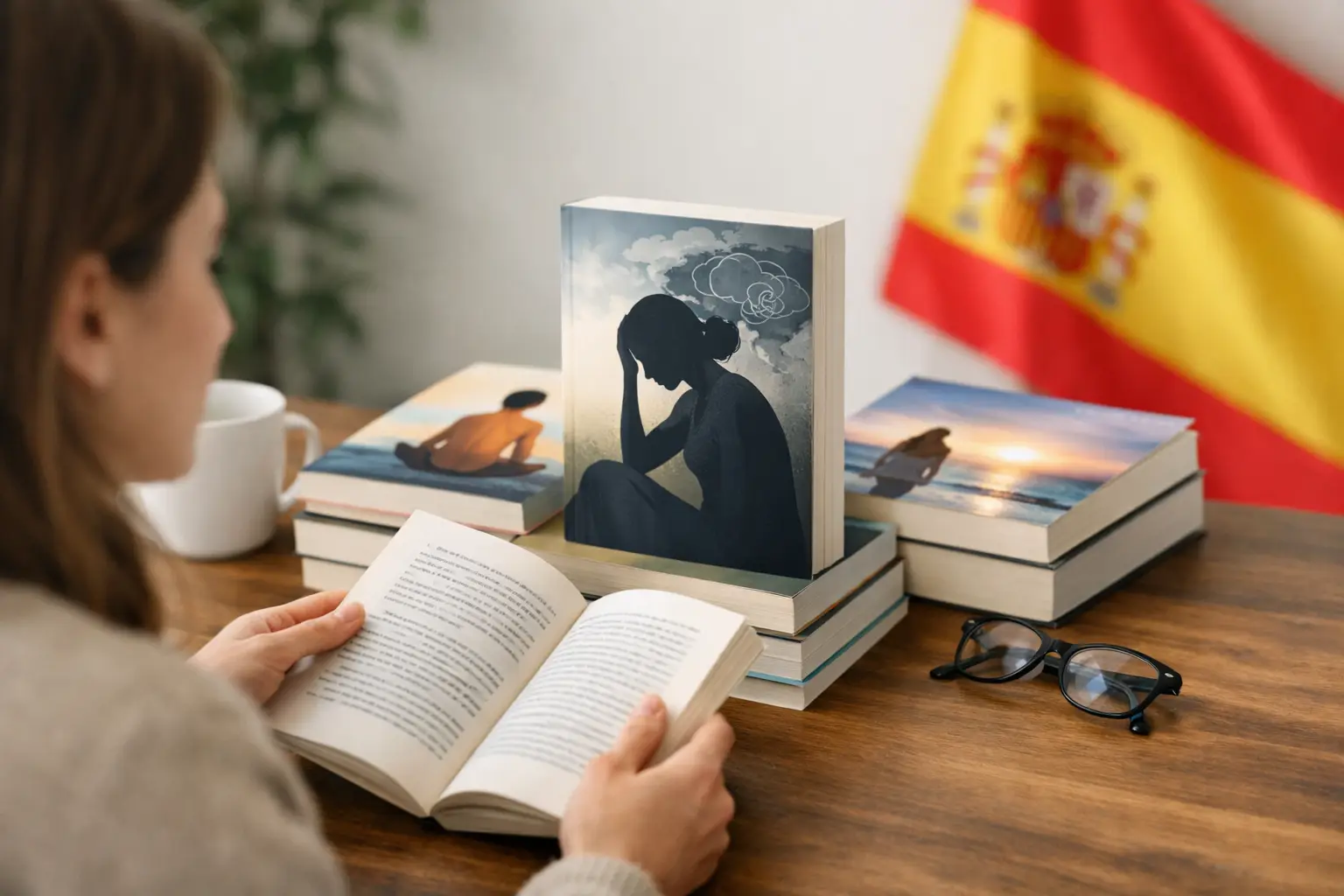
Anxiety rarely arrives when life is convenient. It can show up before a work call, during a school pickup, while paying bills, or at 2 a.m. when your mind refuses to slow down. A Spanish anxiety self help book should not add more pressure. It should give you clear words, usable exercises, and a simple way to respond when your thoughts start running the day.
For many bilingual readers, reading about mental health in Spanish is not just a language preference. It can feel more personal, more familiar, and easier to share with a parent, partner, or family member. But not every book offers the same kind of help. Some explain anxiety well but leave you without a next step. Others offer quick promises that do not hold up when symptoms are intense.
The right book does not need to be complicated. It needs to be practical, respectful, and honest about what self-help can and cannot do.
What a Spanish Anxiety Self Help Book Should Give You
A useful anxiety book should help you move from confusion to action. That means it needs more than comforting phrases or a long explanation of brain chemistry. Understanding anxiety matters, but understanding alone does not always change what happens when your chest tightens, your thoughts race, or you begin avoiding something important.
Look for a book that gives you a repeatable process. You should be able to identify what is happening, use a tool in the moment, and review what helped afterward. This creates a system instead of a one-time burst of motivation.
Clear language matters, too. Mental health terms can become confusing when they are translated too literally or explained with academic language. A strong Spanish-language guide uses everyday words without talking down to you. It makes room for cultural realities such as family expectations, caregiving responsibilities, financial stress, migration, work pressure, and the habit of pushing through distress in silence.
The goal is not to eliminate every anxious feeling. Anxiety is a normal alarm system. The goal is to stop letting that alarm control every decision.
Start With the Problem You Want to Solve
Before choosing a book, get specific about what anxiety looks like in your life. “I feel anxious” is true, but it is broad. A book becomes more useful when it addresses the pattern you are actually dealing with.
You may need help with constant worry that jumps from one problem to another. You may be caught in physical symptoms such as shallow breathing, stomach pain, tension, or trouble sleeping. Perhaps avoidance is getting bigger: unanswered messages, missed appointments, delayed applications, canceled plans. Or maybe the hardest part is the negative thinking cycle that tells you something will go wrong, you will fail, or you cannot handle what comes next.
A practical book does not have to focus on only one symptom. But it should help you recognize your main pattern and choose a response that fits it. If your anxiety is mostly physical, breathing and grounding exercises may be a useful starting point. If you are stuck in catastrophic thinking, you need a method for examining thoughts without arguing with yourself for hours. If avoidance is the issue, you need small, realistic exposure steps rather than vague advice to “be brave.”
Specific problems need specific tools.
Look for tools you can use on a hard day
Read the table of contents and sample sections with one question in mind: Can I use this when I am tired, rushed, or overwhelmed?
The best tools are usually simple enough to remember. They may ask you to pause, name the thought, check the evidence, choose one next action, or return attention to your immediate surroundings. A tool can be short and still be meaningful. In fact, shorter is often better when anxiety has narrowed your focus.
Be cautious with books that rely mostly on affirmations, broad positivity, or instructions to “stop thinking negatively.” Telling yourself not to worry often creates another task to fail at. A better approach teaches you how to notice a thought, reduce its authority, and act according to what matters even when discomfort is present.
Choose Structure Over Inspiration
Inspiration can help you begin. Structure helps you continue.
A good self-help book should make it easy to know what to do first. It might use short chapters, worksheets, reflection prompts, daily practices, or a step-by-step framework. The format matters because anxious minds often struggle with too many choices. If every chapter introduces a new idea without showing how it connects to the last one, the book can become another unfinished project.
Look for a simple sequence: recognize the pattern, calm the immediate response, challenge or reframe unhelpful thinking, take one manageable action, then repeat. You do not need a perfect routine. You need a process you can return to after a difficult morning, a stressful week, or a setback.
This is where concise, blueprint-style guidance can be especially effective. HCT Books approaches personal change as something you can build with clear steps, not something you have to wish your way into. For anxiety, that means working with small actions that create evidence: I made the call. I took the walk. I stayed with the feeling without escaping. I completed one task despite the worry.
Those actions do not make life problem-free. They rebuild trust in your ability to handle it.
Check for a Balanced View of Anxiety
Avoid books that treat anxiety as a personal weakness, a mindset failure, or a problem you can solve through willpower alone. That framing creates shame, and shame usually feeds the cycle.
At the same time, be skeptical of promises that suggest one technique will permanently remove anxiety. Some readers improve quickly with basic tools. Others need more time because anxiety is connected to trauma, depression, panic attacks, chronic stress, health conditions, substance use, or difficult circumstances that cannot be solved with a journal prompt.
A responsible book makes this distinction clear. Self-help can support daily coping, self-awareness, routines, and behavior change. It is not a substitute for professional care when symptoms are severe, persistent, or unsafe.
Consider reaching out to a licensed mental health professional if anxiety is causing panic attacks, keeping you from work or school, disrupting sleep for long periods, leading to substance misuse, or making it hard to care for yourself or others. If you are thinking about harming yourself or feel unable to stay safe, contact emergency services or a crisis resource right away. A book can be part of your support plan, but it should not be your only support in a crisis.
Make Sure the Spanish Feels Natural to You
Spanish is spoken differently across countries, regions, and families. A book does not need to use your exact local expressions to be useful, but it should feel readable and respectful.
Watch for overly formal wording, confusing translations, or phrases that sound like they were copied directly from English. Anxiety is already hard enough to describe. You should not have to decode the language while trying to calm down.
It also helps when a book avoids assumptions about what support looks like. Some readers have close family networks. Others are private, isolated, or carrying responsibilities that leave little time for long routines. Choose guidance that works in real conditions: ten minutes before work, a quiet moment in the car, a note on your phone, or a short practice before sleep.
The best system is the one you can actually use.
Turn Reading Into Practice
Buying a book is not the same as building a skill. To get value from it, keep the starting point small. Read one section, choose one exercise, and test it during the next anxious moment. Do not try to rebuild your entire life in a weekend.
Keep a brief record of what triggers you, what your body does, what you tell yourself, and what action you take next. A few lines are enough. Over time, you may notice that the same fears repeat, the same situations activate you, and the same small tools help more than you expected.
Progress is not measured by never feeling anxious again. It is measured by recovering more quickly, avoiding less, and making choices that are not dictated by fear.
Choose a book that gives you a method you can carry into an ordinary Tuesday. That is where real change has room to grow.