Decluttering Versus Organizing Systems Explained
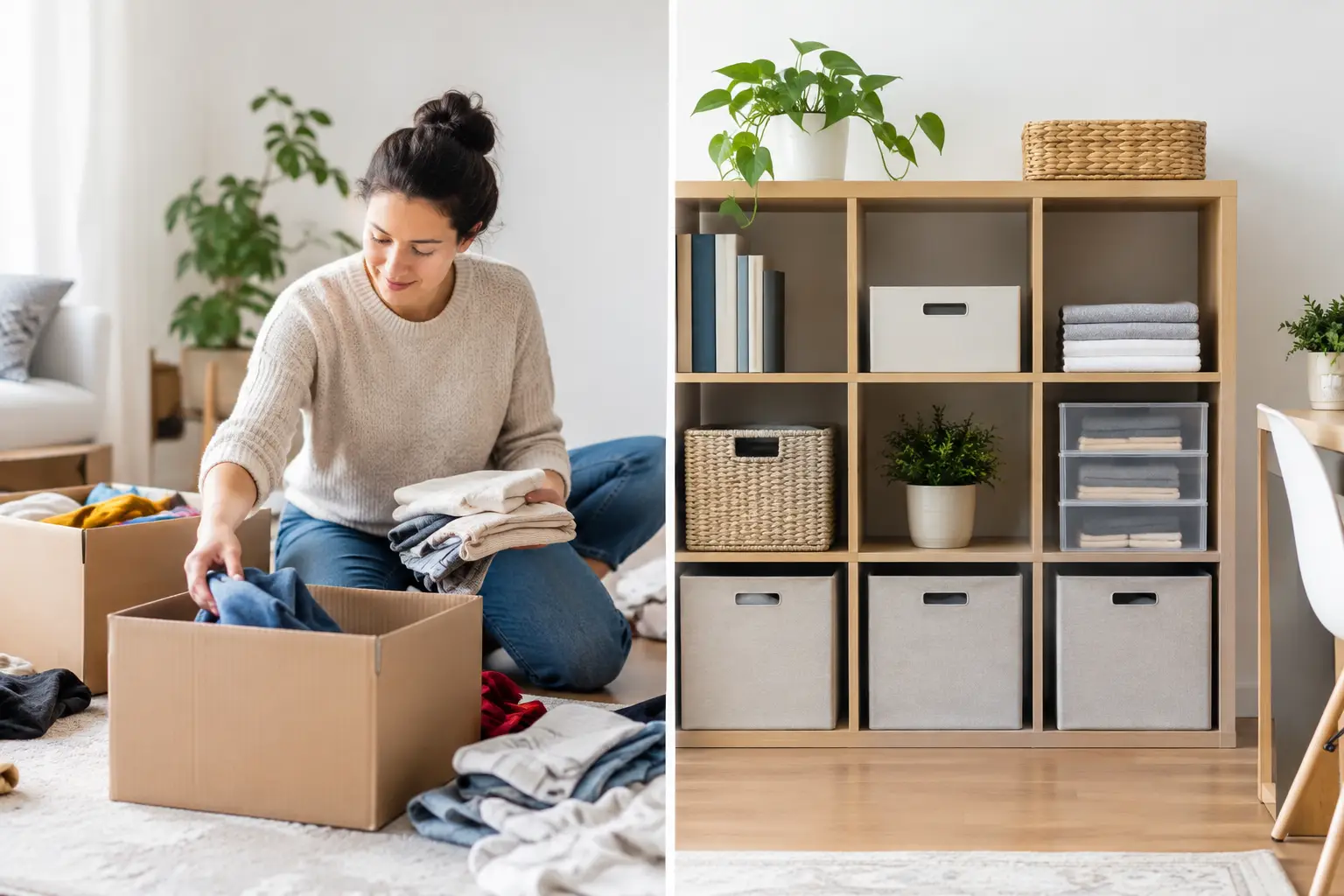
A drawer that will not close is rarely a storage problem. It is usually a decision problem. When people compare decluttering versus organizing systems, they often treat them as competing solutions. They are not. One reduces what your space must hold. The other tells the remaining items where to live and how to return there.
Get the order wrong, and organization becomes a way to hide excess. Get it right, and your home becomes easier to use, reset, and maintain without buying another bin.
Decluttering Removes the Excess
Decluttering is the process of reducing the number of items competing for your space, attention, and energy. Its central question is simple: Does this need to remain in my life or in this area?
That question can be uncomfortable because clutter is not only physical. A pile of papers may represent delayed decisions. A closet full of clothes may represent money spent, a former identity, or the hope that life will become more organized later. This is why decluttering takes effort even when the practical answer is obvious.
The goal is not to own as little as possible. The goal is to remove what creates friction without serving a real purpose. A useful item that is used weekly belongs. A duplicate tool you forgot you owned may not. An item with sentimental value may stay, but it should stay by choice, not because it was never evaluated.
Decluttering gives every remaining object more room, more visibility, and a clearer role. It also lowers the maintenance burden. Fewer dishes mean fewer dishes to wash. Fewer clothes mean fewer choices and less laundry buildup. Fewer papers mean fewer places for important documents to disappear.
Organizing Systems Create Order You Can Repeat
An organizing system is a repeatable method for storing, finding, using, and returning items. Its central question is different: Where does this belong, and can I put it back without effort?
A system is not a collection of matching containers. It is a practical agreement between your habits and your space. Your keys need a home near the door because that is where you need them. Charging cables need a defined location near where devices are used. Everyday medication needs safe, visible access for the person who uses it.
Good systems reduce decision-making at the moment you are tired, rushed, distracted, or managing other people. They make the right action easier than the wrong one.
This matters because a neat room is not always an organized room. You can make a surface look clean by moving everything into a closet. But if no one knows what is in that closet or where items return, the clutter has only changed location. A working system holds up after a busy week, not just after a weekend reset.
Decluttering Versus Organizing Systems: The Key Difference
Decluttering addresses volume. Organizing addresses flow.
If you have more items than the available space can comfortably support, organizing will feel like constant rearranging. You may label boxes, stack shelves, and buy organizers, yet the room still feels crowded. The issue is not a lack of containers. It is that too much is being asked of the space.
If you have a reasonable amount of belongings but no designated homes, decluttering alone will not solve the daily mess. You may donate a bag of items and still lose your mail, leave shoes in the hallway, and search for scissors every afternoon. The issue is not volume. It is the absence of a return path.
Most overwhelmed homes need both, but not in equal amounts. A packed garage may need major decluttering before any organization begins. A mostly functional kitchen may only need simple zones: cooking tools near the stove, food containers in one cabinet, and cleaning supplies where cleanup happens.
The practical rule is this: Declutter until your space can hold what remains without strain. Then organize what remains around real use.
Use the Clear-Place-Reset Method
You do not need to overhaul your entire home. Start with one contained area: one drawer, one shelf, one countertop, or one square meter of a room. Small boundaries prevent the project from becoming another source of overwhelm.
Clear
Remove everything from the selected area. Handle each item once and make a direct decision: keep it here, move it to its proper area, donate it, recycle it, discard it, or decide later.
The “decide later” category needs limits. Use one small box, not a growing pile. Give it a review date within two weeks. If an item remains undecided indefinitely, it continues to consume space and attention.
Do not organize while you are still deciding what to keep. That is where people lose time. They begin folding, labeling, and arranging items that should not remain in the space at all.
Place
Give the items you keep a specific home based on frequency and location of use. Daily-use items deserve the easiest access. Occasional items can go higher, lower, or farther away. Rarely used but necessary items may belong in longer-term storage.
Keep the system visible enough to follow. If every household member needs to understand it, use simple categories. “School supplies,” “batteries,” and “pet items” work better than complicated subcategories that only one person remembers.
Containers can help, but only after the category is clear. Use what you already own first: a drawer divider, shoebox, basket, tray, or folder. Buy storage only when you can identify the exact problem it solves. A container should define a limit, not create permission to keep unlimited extras.
Reset
A system is proven during reset, not setup. At the end of the day, can you return items in a few minutes? Can someone else put things away without asking where they go? Can you find what you need tomorrow?
If the answer is no, adjust the system. Move the item closer to where it is used. Make the category broader. Reduce the number of steps. A system that requires perfect discipline is not practical for a busy household.
Signs You Need to Declutter First
Start with decluttering when shelves, drawers, and closets are physically overfilled; when you own duplicates because you cannot find what you have; or when putting one item away requires moving several others. These are capacity problems.
Also declutter first when organizing makes you feel stuck. If you keep shifting objects from one pile to another, stop arranging. Reduce the pile. The fastest path to order is often fewer decisions tomorrow because you made a clear decision today.
Be careful with emotional categories such as photos, inherited items, old letters, and children’s artwork. They may need a separate session with more time and less pressure. You do not need to force a fast decision to make progress elsewhere. Start with low-emotion, high-friction categories like expired products, broken items, duplicates, old mail, and unused packaging.
Signs You Need an Organizing System First
Start with organization when useful items repeatedly land in the wrong places. This commonly happens with entryway items, paperwork, laundry, chargers, cleaning supplies, and children’s everyday belongings.
The problem may be a missing landing zone. Mail needs one place to be sorted. Bags need hooks or a designated shelf near the exit. Laundry needs a location for dirty clothes before they reach the chair, floor, or bathroom counter. These systems are small, but they protect the whole room from daily buildup.
Do not confuse a system with a strict routine. A system can be flexible. A family may need one basket for clean clothes waiting to be folded during a demanding week. The system works if the basket has a defined purpose, location, and limit. It fails when it becomes permanent storage with no next step.
Avoid the Storage Product Trap
Storage products are useful tools, not solutions. Buying bins before reducing volume can make clutter more expensive and harder to see. The items look contained, but they still require space, cleaning, tracking, and future decisions.
Use this test before purchasing anything: What exact category needs containment? Where will it live? How many items must it hold? What will happen when it is full?
If you cannot answer those questions, wait. You may need to declutter, change the location, or simplify the category instead.
Build for Real Life, Not for a Perfect Week
The right system depends on your household, schedule, health, and available space. A parent with young children needs accessible, forgiving storage. A student in a small apartment may need multipurpose zones. A caregiver may need clear visual systems that reduce mental load. There is no universal layout that works for everyone.
What does transfer across homes is the standard: your space should support the life you actually live. It should not demand extra energy you do not have.
Choose one area today. Clear what does not belong. Place what remains where it can be used. Reset it once before bed. A workable home is built through small systems you can keep, not dramatic projects you have to recover from.