How to Create a Calming Space That Works Daily
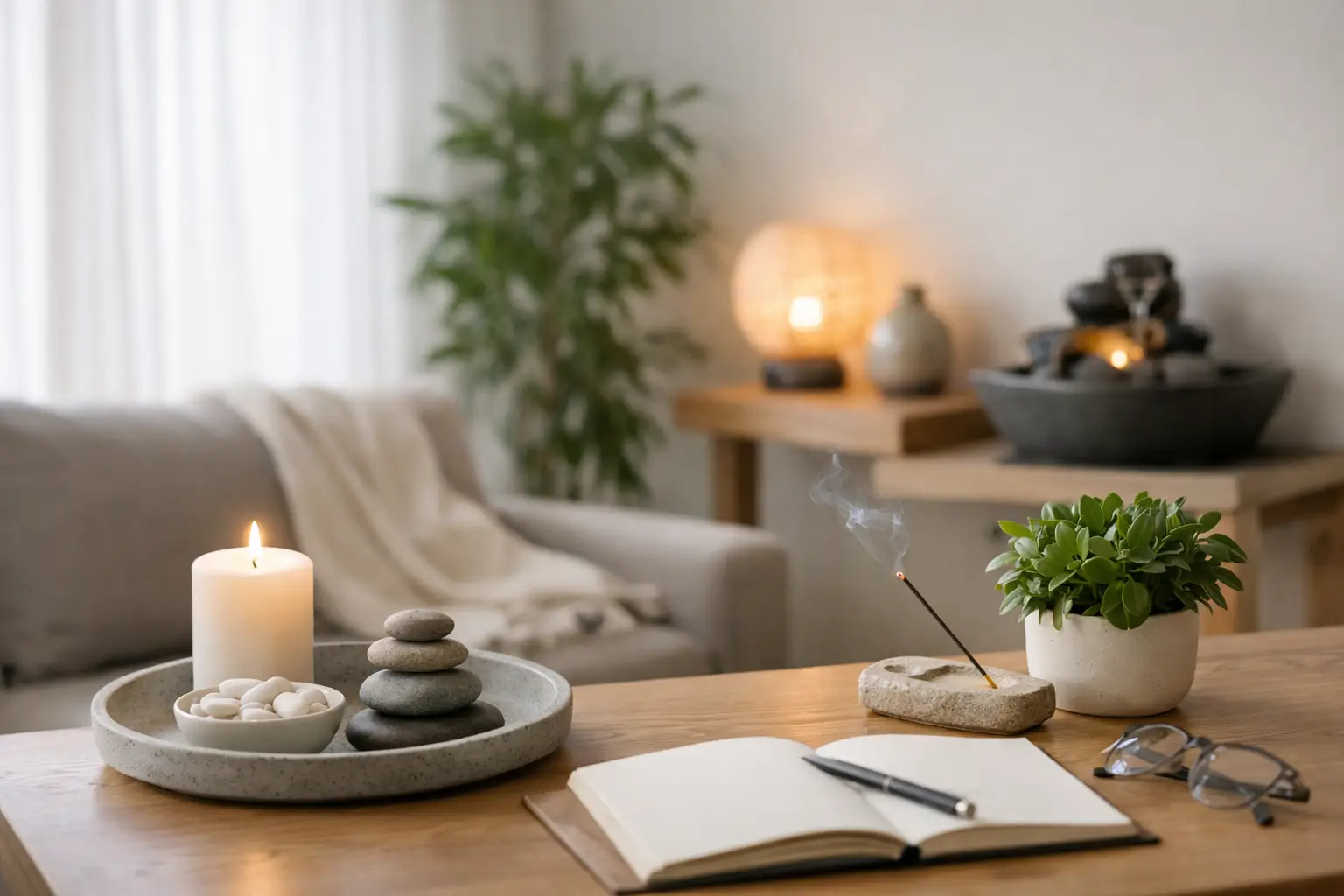
A calming space is not a room that looks perfect in a photo. It is a small area that asks less of your brain. When your eyes land on fewer loose items, your body has a place to pause. When the things you need are easy to reach, daily life creates less friction. That is the practical answer to how to create a calming space: reduce demands, define purpose, and make reset easy.
You do not need a renovation, matching furniture, or a cart full of storage products. You need one area that supports the state you want to enter - rest, focus, recovery, or a quiet moment before the next responsibility.
Start With One Square Meter
Trying to calm an entire home can become another overwhelming project. Start smaller. Choose one square meter: a section of a desk, one bedside surface, a chair, a corner of the couch, or a small area of floor.
This is your calm zone. Its job is simple. It should make one useful activity easier and one common stressor less visible.
A bedside calm zone may support sleep. A desk zone may support focused work. A chair by a window may support reading, breathing, prayer, journaling, or simply sitting without a screen. Do not give one small space five jobs. Multipurpose areas are real life, especially in smaller homes, but every area still needs a primary purpose.
Ask one question before you touch anything: What do I need to be able to do here without searching, moving piles, or feeling behind?
Write the answer in one sentence. For example: “I want to sit here for ten minutes after work without seeing unfinished tasks.” That sentence becomes your filter.
Remove Visual Noise Before You Add Comfort
Most people begin by adding candles, plants, blankets, or decor. Those can help, but they do not solve the main problem if the surface underneath is crowded. A calming space cannot compete with bills, tangled chargers, old cups, laundry, unopened packages, and items with no assigned home.
Clear the area completely. Then sort what was there into three groups: belongs in this zone, belongs elsewhere, and does not need to stay.
Be direct. If an item does not help the area perform its primary purpose, move it. You do not have to decide the future of every object in your home today. Put “belongs elsewhere” items in a temporary relocation box or bag, then return them when you have time. The goal is to protect the zone now, not create a perfect organizing project.
Visual noise is not only clutter. It can also be too many colors, too many messages, too many open tabs on a screen, or a chair that has become a storage unit. Notice what makes your attention jump. Reduce that first.
A clear surface may feel almost too bare at first. That is normal. Your brain is used to scanning what is there. Leave some empty space on purpose. Empty space is not wasted space. It is recovery space.
Build the Space Around One Need
Once the zone is clear, add back only what serves the need you defined. Keep the number low. A calming space works because it is easy to understand at a glance.
For a rest zone, that may mean a comfortable seat, one source of softer light, a blanket, and a book or journal. For a work zone, it may mean your laptop, charger, notebook, pen, water, and one item that signals focus. For a sleep zone, it may mean a clear nightstand, a lamp, medication if needed, water, and a place for your phone away from the pillow.
The right setup depends on your real constraints. Parents may need a space that can be restored in two minutes after children are asleep. Students may have one desk serving school, meals, and hobbies. Caregivers may have little uninterrupted time. Do not copy a setup built for someone with more rooms, money, or free hours.
Build for the life you have. If the area must change functions, create a small reset container. A basket, drawer, tray, or bag can hold the items for the secondary activity. When that activity ends, the container closes and the calm zone returns.
Control the Inputs You Can Control
Calm is physical. Your nervous system responds to light, sound, temperature, texture, and visual order. You do not need to control every input. Choose the two that affect you most.
Light is often the fastest change. Harsh overhead light can keep a space feeling active and exposed. If possible, use a lamp with a warm bulb, position yourself near daylight, or lower the brightness in the evening. If you need bright light for work, keep it directed at the task instead of flooding the whole room.
Sound matters too. Some people relax with silence. Others find silence makes anxious thoughts louder. If that is true for you, use a predictable background sound: a fan, quiet instrumental music, rainfall audio, or steady white noise. The point is not to drown out your thoughts. It is to remove sudden, competing noise.
Temperature and texture are smaller levers, but they are real. A cool room may help with sleep. A supportive chair may prevent physical discomfort from becoming irritability. A clean blanket, smooth pillowcase, or comfortable socks can signal that the space is for care rather than endurance.
Avoid turning comfort into another shopping list. Use what you already own first. A lamp from another room, a folded throw, a mug, or a spare basket may be enough.
Create a Boundary for Screens and Loose Items
Many spaces fail because they become landing zones. Phones, mail, receipts, cables, dishes, and random objects arrive faster than they leave. The solution is not stronger willpower. It is a clear boundary.
Give common intruders a nearby home. Put a small tray by the door for keys and wallet. Keep a charging spot outside the sleep zone. Use one container for papers that need action. Place a laundry basket where clothes are actually removed, not where you think they should be removed.
Then make one rule for the calm zone: nothing stays here unless it supports the zone’s purpose.
This rule is especially useful with screens. If your calm space is meant for rest, your phone may be the biggest source of visual and mental noise. You may not be able to keep it out completely, particularly if you need it for work, family, or safety. Create distance instead. Turn it face down, silence nonessential alerts, or place it on a shelf across the room.
Distance changes behavior. A phone within arm’s reach invites automatic checking. A phone that requires you to stand up gives you a moment to choose.
Use a Two-Minute Closing Reset
A calming space does not stay calm because you organize it once. It stays calm because restoring it is easy enough to do when you are tired.
At the end of the day or after using the zone, run a two-minute reset. Return the few items that belong there. Remove cups, wrappers, and papers. Put the blanket back. Close the notebook. Clear the chair. Stop when the timer ends.
Do not expand this into cleaning the whole room. The reset is a boundary, not a punishment. Its purpose is to make tomorrow easier.
If two minutes is too much on a difficult day, use a one-item reset. Throw away one piece of trash. Put one object back. Clear one corner of the surface. Small action still protects the system.
Make the Space Support Your Mind, Not Judge It
A calming space can support mental wellbeing, but it is not a cure for anxiety, depression, grief, burnout, or trauma. If persistent symptoms are making daily life hard, professional support matters. Still, your environment can either add friction or reduce it.
Do not use the space as proof that you should always feel calm. Some days you will sit in a clean, quiet corner and still feel restless, sad, angry, or mentally exhausted. That does not mean the space failed. It gave you fewer demands while you moved through a hard moment.
Keep the area free from pressure-heavy reminders when possible. A stack of overdue tasks, a mirror you avoid, or a wall covered in goals may not belong in your recovery zone. Motivation has its place. So does relief.
Your calming space does not need to impress anyone. It needs to be available when your attention is scattered, your home feels loud, or you need one place that does not ask you to perform. Clear one meter today, assign it one purpose, and let that small area become evidence that control can begin without a major overhaul.