How to Organize One Square Meter Without Buying More
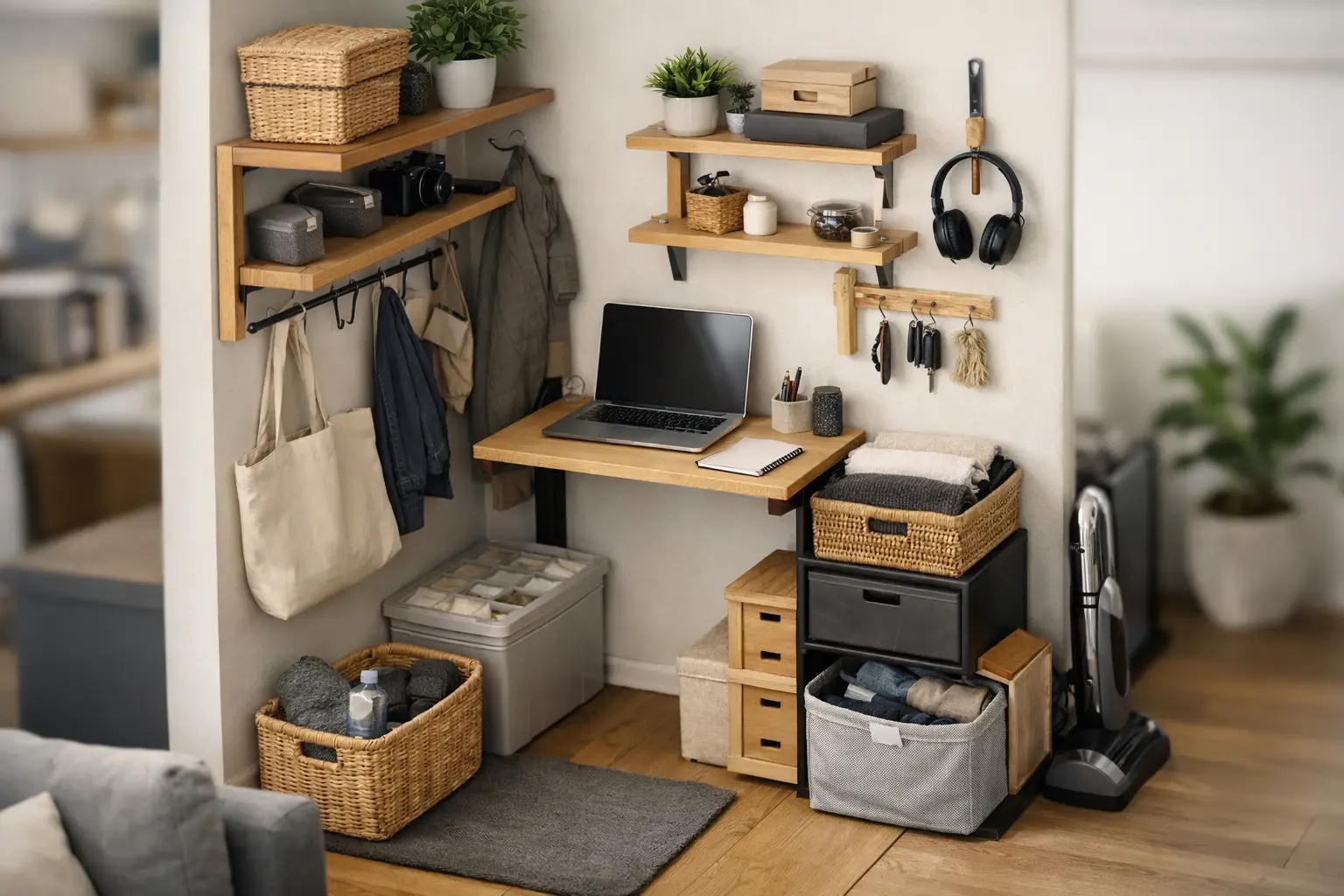
A crowded counter, desk, chair, or bedside table can make an entire room feel out of control. The fastest way to change that feeling is not to reorganize your whole home. Learn how to organize one square meter first. It is small enough to finish today and large enough to create visible relief.
One square meter is not a decorating project. It is a working zone. It should support one clear part of your day: making breakfast, starting work, getting dressed, paying bills, or resting at night. When a small zone has too many jobs, clutter is not a personal failure. It is a system failure.
Start With a One-Meter Boundary
Choose a physical area you can see and measure roughly. A square meter is about 39 inches by 39 inches. It may be the top of a desk, one kitchen counter section, a shelf, the floor beside your bed, or the area around your front door.
Do not begin with the most emotionally loaded place in your home. Start where a reset will remove friction from your daily routine. If mornings feel rushed, choose the entryway or kitchen counter. If work feels scattered, choose your desk. If your mind stays active at night, choose the surface beside your bed.
Define the boundary before touching anything. This matters because clutter expands when the task has no edge. “I should organize the bedroom” is vague and exhausting. “I will reset this 39-inch section of my desk” is direct and finishable.
Use the One-Meter Reset
The goal is not to make the area empty. The goal is to make it useful. Use this four-part reset: clear, decide, assign, protect.
Clear Everything Out
Remove every item from the one-meter zone. Put the contents on a nearby floor, chair, or table. You need to see the actual surface before you can decide what belongs there.
Wipe the area while it is empty. This takes less than a minute, but it creates a visible break between the old pattern and the new one. A clean surface gives you a better standard for what returns.
Do not clean the entire room. Stay inside the boundary. The method works because it limits decisions and gives you a completed result before your energy disappears.
Decide the Zone’s Job
Give the space one primary function. Write it down if that helps. Examples include “morning launch pad,” “focused work station,” “nighttime reset area,” or “meal prep zone.”
A zone can have a secondary function, but it cannot support five competing ones without becoming a storage pile. A desk can hold your laptop and current project materials. It should not also become a mail archive, charging station for every device, snack shelf, and laundry landing spot.
Ask one question for each item: does this help the main job of this square meter? If the answer is no, it does not return.
That does not mean the item is bad or must be thrown away. It may belong in another room, a drawer, a donation box, or the trash. Organization improves when items are placed by use, not by guilt.
Assign a Home for What Returns
Return only the items needed for the zone’s job. Give each one a specific position, not just a general area.
Your keys may go in a bowl near the door. Your notebook may sit to the left of your keyboard. Your medication may have a designated tray on a shelf. The exact setup depends on your habits, not on a photo from someone else’s home.
Use containers only when they solve a real problem. A tray can stop loose items from spreading. A small box can group cables. A folder can keep active papers together. But buying bins before deciding what belongs in the space often creates organized clutter.
Use what you already own first: a plate, mug, shoebox lid, folder, jar, or drawer divider. The system matters more than the product.
Protect the Space With a Limit
Every one-meter zone needs a capacity limit. This is the rule that prevents a clear surface from becoming cluttered again.
Set limits you can see. One active notebook on the desk. Three kitchen tools on the counter. One basket by the door. One week of mail in the tray. When the limit is reached, something must be finished, filed, removed, or relocated before another item enters.
This is not about perfection. It is about preventing silent buildup. Most clutter grows through small exceptions: “I will deal with this later,” repeated for days or weeks. A visible limit turns later into a clear decision.
Build for Real Life, Not Ideal Life
A good system works when you are tired, busy, stressed, or distracted. If your setup requires folding every cable perfectly or sorting papers into seven categories each night, it will probably fail.
Make the return action easy. Place a laundry hamper where clothes actually come off. Put a trash can where wrappers collect. Keep a charging spot close to the outlet you use. Store frequently used items within reach and occasional items farther away.
This is where many organizing plans break down. People organize based on where an item should go, not where they naturally use it. The better choice is usually the one that reduces steps.
There are trade-offs. A countertop with only a coffee maker may look cleaner, but if you make coffee every morning, storing the filters in a distant cabinet may add unnecessary friction. Keep the daily tool close. Remove the extras around it.
Handle the Items That Do Not Belong
After you reset the square meter, you will have a small group of displaced items. Do not let them become a new pile called “deal with later.” Process them immediately using four destinations:
- Put away items that already have a home elsewhere.
- Create one temporary holding box for items that need a decision.
- Donate or recycle items you no longer use.
- Throw away trash, expired products, and broken items you will not repair.
The temporary box is useful when decisions are genuinely difficult. Label it with a date. If you have not needed its contents after 30 days, review it once and let more go. The box should hold unresolved items briefly, not become permanent furniture.
Maintain It in Two Minutes
A one-meter reset does not need a weekly overhaul. It needs a short closing routine. At the end of the workday, before bed, or after dinner, take two minutes to return the zone to its assigned job.
Put back the few items that wandered in. Remove cups, receipts, packaging, and unfinished tasks that do not belong there. Then stop. Do not turn a two-minute reset into a late-night cleaning session.
Consistency beats intensity. A small area reset daily will change how you experience a room more than an occasional four-hour organizing sprint followed by weeks of buildup.
When One Square Meter Is Not Enough
Once the first zone stays functional for a week, choose the next square meter connected to the same routine. If you reset your desk, the next area may be the drawer beside it. If you reset the entryway, the next zone may be the shoe area or bag storage.
Do not expand because you feel pressure to transform everything at once. Expand because the first system is working. This protects your energy and lets you learn what actually causes clutter in your home.
The 1-Meter Method Blueprint is built on this principle: control starts with a boundary you can manage. You do not need expensive storage, a perfect home, or a free weekend. You need one defined space, one clear purpose, and a rule that keeps the space useful.
Choose one square meter today. Clear it, give it a job, and protect that job. A small area that works can give you something larger than a tidy surface: proof that your environment can support you instead of draining you.